
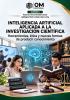
Inteligencia artificial aplicada a la investigación científica: herramientas, ética y nuevas formas de producir conocimiento
Palabras clave:
inteligencia artificial, investigación científica, integridad científica, reproducibilidad, escritura académicaSinopsis
Este libro examina la incorporación de la inteligencia artificial en la investigación científica mediante un recorrido que articula decisiones metodológicas, herramientas y responsabilidad académica; su propósito es orientar un uso crítico que preserve la correspondencia entre preguntas, evidencia y conclusiones, atendiendo a condiciones de acceso y formación relevantes para América Latina; la obra desarrolla la búsqueda y verificación de fuentes, la preparación y análisis de datos, la protección de información y la comunicación de hallazgos, con instrucciones seleccionadas, registros de decisiones y controles cuyo alcance se explica; un caso didáctico con sesenta registros sintéticos permite mostrar la depuración de datos, el contraste de cálculos y la revisión de afirmaciones, acompañado por fragmentos cualitativos ficticios que conservan su carácter ilustrativo; el análisis distingue asociación, predicción y causalidad, y examina la autoría, la declaración del uso de herramientas y las condiciones de una ciencia abierta compatible con derechos y permisos; el aporte consiste en ofrecer procedimientos revisables y criterios transferibles, sin presentar la simulación como evidencia sobre estudiantes reales ni atribuir eficacia comparativa a la asistencia tecnológica; se propone una práctica investigativa que conserve la procedencia de los materiales y permita comprender, cuestionar y corregir los resultados comunicados a la comunidad científica.
Descargas
Los datos de descarga aún no están disponibles.
Referencias
Aeon, B., Faber, A., & Panaccio, A. (2021). Does time management work? A meta-analysis. PLOS ONE, 16(1), Artículo e0245066. https://doi.org/10.1371/journal.pone.0245066
Afzaal, M., & Nouri, J. (2024). A systematic review of software for learning analytics in higher education. International Journal of Emerging Technologies in Learning, 19(7), 17–43. https://doi.org/10.3991/ijet.v19i07.50313
Aucapiña-Tubón, A. P., Rodríguez-Loor, J. E., Bombón-Chico, S. H., & Salazar-Cedeño, J. J. (2026). Uso de la IA en la educación: Desafíos éticos y consecuencias sociales en Ecuador. Innova Science Journal, 4(2), 569–579. https://doi.org/10.63618/omd/isj/v4/n2/296
Autio, C., Schwartz, R., Dunietz, J., Jain, S., Stanley, M., Tabassi, E., Hall, P., & Roberts, K. (2024). Artificial intelligence risk management framework: Generative artificial intelligence profile (NIST AI 600-1). National Institute of Standards and Technology. https://doi.org/10.6028/NIST.AI.600-1
Bender, E. M., Gebru, T., McMillan-Major, A., & Shmitchell, S. (2021). On the dangers of stochastic parrots: Can language models be too big? En Proceedings of the 2021 ACM Conference on Fairness, Accountability, and Transparency (pp. 610–623). Association for Computing Machinery. https://doi.org/10.1145/3442188.3445922
Birhane, A. (2021). Algorithmic injustice: A relational ethics approach. Patterns, 2(2), 100205. https://doi.org/10.1016/j.patter.2021.100205
Buçinca, Z., Malaya, M. B., & Gajos, K. Z. (2021). To trust or to think: Cognitive forcing functions can reduce overreliance on AI in AI-assisted decision-making. Proceedings of the ACM on Human-Computer Interaction, 5(CSCW1), Artículo 188. https://doi.org/10.1145/3449287
Byrne, D. (2022). A worked example of Braun and Clarke’s approach to reflexive thematic analysis. Quality & Quantity, 56(3), 1391–1412. https://doi.org/10.1007/s11135-021-01182-y
Cheng, A., Calhoun, A., & Reedy, G. (2025). Artificial intelligence-assisted academic writing: Recommendations for ethical use. Advances in Simulation, 10, Artículo 22. https://doi.org/10.1186/s41077-025-00350-6
Committee on Publication Ethics. (2024). Authorship and AI tools (Versión 1). https://doi.org/10.24318/cCVRZBms
Congreso Constituyente Democrático. (1993). Constitución Política del Perú. Artículo 2, numeral 6. Edición del Congreso de la República, noviembre de 2022, p. 12. https://www3.congreso.gob.pe/Docs/biblioteca/Constitucion/CP-ED-Nov2022/files/basic-html/page12.html
Congreso de la República del Perú. (2011). Ley N.º 29733, Ley de Protección de Datos Personales. Diario Oficial El Peruano, 3 de julio de 2011. Texto actualizado disponible en la Superintendencia del Mercado de Valores. https://www.smv.gob.pe/Uploads/Ley_29733_vigente_2025.pdf
Congreso de la República del Perú. (2023). Ley N.º 31814, Ley que promueve el uso de la inteligencia artificial en favor del desarrollo económico y social del país. Diario Oficial El Peruano, 5 de julio de 2023. https://busquedas.elperuano.pe/dispositivo/NL/2192926-1
Del Giudice, M. (2024). The prediction-explanation fallacy: A pervasive problem in scientific applications of machine learning. Methodology, 20(1), 22–46. https://doi.org/10.5964/meth.11235
De Paoli, S. (2024). Performing an inductive thematic analysis of semi-structured interviews with a large language model: An exploration and provocation on the limits of the approach. Social Science Computer Review, 42(4), 997–1019. https://doi.org/10.1177/08944393231220483
Floridi, L. (2023). The ethics of artificial intelligence: Principles, challenges, and opportunities. Oxford University Press. https://doi.org/10.1093/oso/9780198883098.001.0001
Gao, C. A., Howard, F. M., Markov, N. S., Dyer, E. C., Ramesh, S., Luo, Y., & Pearson, A. T. (2023). Comparing scientific abstracts generated by ChatGPT to real abstracts with detectors and blinded human reviewers. npj Digital Medicine, 6, Artículo 75. https://doi.org/10.1038/s41746-023-00819-6
Gartlehner, G., Kahwati, L., Hilscher, R., Thomas, I., Kugley, S., Crotty, K., Viswanathan, M., Nussbaumer‐Streit, B., Booth, G., Erskine, N., Konet, A., & Chew, R. (2024). Data extraction for evidence synthesis using a large language model: A proof-of-concept study. Research Synthesis Methods, 15(4), 576–589. https://doi.org/10.1002/jrsm.1710
Gebru, T., Morgenstern, J., Vecchione, B., Vaughan, J. W., Wallach, H., Daumé, H., III, & Crawford, K. (2021). Datasheets for datasets. Communications of the ACM, 64(12), 86–92. https://doi.org/10.1145/3458723
Ghassemi, M., Oakden-Rayner, L., & Beam, A. L. (2021). The false hope of current approaches to explainable artificial intelligence in health care. The Lancet Digital Health, 3(11), e745–e750. https://doi.org/10.1016/S2589-7500(21)00208-9
Gusenbauer, M. (2022). Search where you will find most: Comparing the disciplinary coverage of 56 bibliographic databases. Scientometrics, 127(5), 2683–2745. https://doi.org/10.1007/s11192-022-04289-7
Haddaway, N. R., Grainger, M. J., & Gray, C. T. (2022). Citationchaser: A tool for transparent and efficient forward and backward citation chasing in systematic searching. Research Synthesis Methods, 13(4), 533–545. https://doi.org/10.1002/jrsm.1563
Haddaway, N. R., Rethlefsen, M. L., Davies, M., Glanville, J., McGowan, B., Nyhan, K., & Young, S. (2022). A suggested data structure for transparent and repeatable reporting of bibliographic searching. Campbell Systematic Reviews, 18(4), Artículo e1288. https://doi.org/10.1002/cl2.1288
Hofman, J. M., Watts, D. J., Athey, S., Garip, F., Griffiths, T. L., Kleinberg, J., Margetts, H., Mullainathan, S., Salganik, M. J., Vazire, S., Vespignani, A., & Yarkoni, T. (2021). Integrating explanation and prediction in computational social science. Nature, 595(7866), 181–188. https://doi.org/10.1038/s41586-021-03659-0
Hooker, S. (2021). Moving beyond “algorithmic bias is a data problem”. Patterns, 2(4), 100241. https://doi.org/10.1016/j.patter.2021.100241
Hosseini, M., Rasmussen, L. M., & Resnik, D. B. (2024). Using AI to write scholarly publications. Accountability in Research, 31(7), 715–723. https://doi.org/10.1080/08989621.2023.2168535
Hosseini, M., Resnik, D. B., & Holmes, K. (2023). The ethics of disclosing the use of artificial intelligence tools in writing scholarly manuscripts. Research Ethics, 19(4), 449–465. https://doi.org/10.1177/17470161231180449
Huntington-Klein, N. (2022). The effect: An introduction to research design and causality. Chapman and Hall/CRC. https://doi.org/10.1201/9781003226055
Jácome-Jácome, J. P. (2026). La inteligencia artificial como agente de innovación pedagógica orientada a la personalización del aprendizaje en educación superior. Innova Science Journal, 4(1), 1–19. https://doi.org/10.63618/omd/isj/v4/n1/205
Jácome-Jácome, J. P., Alarcón-Anco, R. J., Chávez-Rodríguez, M. A., Espinel-Bermeo, A. C., Ávila-Guaman, D. E., Sornoza-Bravo, J. C., Pico-Chavarría, V. F., Sánchez-Vásquez, M. E., Zambrano-Zambrano, A. B., & Sánchez-Vásquez, M. C. (2026). Inteligencia artificial aplicada a la educación, la investigación y las organizaciones: Casos, herramientas y perspectivas para América Latina. Oriente-Manabí Editorial. https://doi.org/10.63618/omeditorial/l33
James, G., Witten, D., Hastie, T., Tibshirani, R., & Taylor, J. (2023). An introduction to statistical learning: With applications in Python. Springer. https://doi.org/10.1007/978-3-031-38747-0
Jumper, J., Evans, R., Pritzel, A., Green, T., Figurnov, M., Ronneberger, O., Tunyasuvunakool, K., Bates, R., Žídek, A., Potapenko, A., Bridgland, A., Meyer, C., Kohl, S. A. A., Ballard, A. J., Cowie, A., Romera-Paredes, B., Nikolov, S., Jain, R., Adler, J., … Hassabis, D. (2021). Highly accurate protein structure prediction with AlphaFold. Nature, 596(7873), 583–589. https://doi.org/10.1038/s41586-021-03819-2
Juna-Pozo, L. P. (2025). Percepciones sobre la inteligencia artificial analizadas con componentes principales y regresión multinomial. Innova Science Journal, 3(E1), 289–302. https://doi.org/10.63618/omd/isj/v3/nE1/194
Kapoor, S., Cantrell, E. M., Peng, K., Pham, T. H., Bail, C. A., Gundersen, O. E., Hofman, J. M., Hullman, J., Lones, M. A., Malik, M. M., Nanayakkara, P., Poldrack, R. A., Raji, I. D., Roberts, M., Salganik, M. J., Serra-Garcia, M., Stewart, B. M., Vandewiele, G., & Narayanan, A. (2024). REFORMS: Consensus-based recommendations for machine-learning-based science. Science Advances, 10(18), eadk3452. https://doi.org/10.1126/sciadv.adk3452
Kapoor, S., & Narayanan, A. (2023). Leakage and the reproducibility crisis in machine-learning-based science. Patterns, 4(9), Artículo 100804. https://doi.org/10.1016/j.patter.2023.100804
Kasneci, E., Sessler, K., Küchemann, S., Bannert, M., Dementieva, D., Fischer, F., Gasser, U., Groh, G., Günnemann, S., Hüllermeier, E., Krusche, S., Kutyniok, G., Michaeli, T., Nerdel, C., Pfeffer, J., Poquet, O., Sailer, M., Schmidt, A., Seidel, T., … Kasneci, G. (2023). ChatGPT for good? On opportunities and challenges of large language models for education. Learning and Individual Differences, 103, Artículo 102274. https://doi.org/10.1016/j.lindif.2023.102274
Khraisha, Q., Put, S., Kappenberg, J., Warraitch, A., & Hadfield, K. (2024). Can large language models replace humans in systematic reviews? Evaluating GPT-4’s efficacy in screening and extracting data from peer-reviewed and grey literature in multiple languages. Research Synthesis Methods, 15(4), 616–626. https://doi.org/10.1002/jrsm.1715
Krenn, M., Pollice, R., Guo, S. Y., Aldeghi, M., Cervera-Lierta, A., Friederich, P., dos Passos Gomes, G., Häse, F., Jinich, A., Nigam, A., Yao, Z., & Aspuru-Guzik, A. (2022). On scientific understanding with artificial intelligence. Nature Reviews Physics, 4(12), 761–769. https://doi.org/10.1038/s42254-022-00518-3
Lakens, D. (2022). Sample size justification. Collabra: Psychology, 8(1), Artículo 33267. https://doi.org/10.1525/collabra.33267
Laubach, Z. M., Murray, E. J., Hoke, K. L., Safran, R. J., & Perng, W. (2021). A biologist’s guide to model selection and causal inference. Proceedings of the Royal Society B: Biological Sciences, 288(1943), Artículo 20202815. https://doi.org/10.1098/rspb.2020.2815
Lee, K. J., Tilling, K. M., Cornish, R. P., Little, R. J. A., Bell, M. L., Goetghebeur, E., Hogan, J. W., & Carpenter, J. R. (2021). Framework for the treatment and reporting of missing data in observational studies: The Treatment And Reporting of Missing data in Observational Studies framework. Journal of Clinical Epidemiology, 134, 79–88. https://doi.org/10.1016/j.jclinepi.2021.01.008
Lee, V. V., van der Lubbe, S. C. C., Goh, L. H., & Valderas, J. M. (2024). Harnessing ChatGPT for thematic analysis: Are we ready? Journal of Medical Internet Research, 26, Artículo e54974. https://doi.org/10.2196/54974
Liang, W., Yuksekgonul, M., Mao, Y., Wu, E., & Zou, J. (2023). GPT detectors are biased against non-native English writers. Patterns, 4(7), Artículo 100779. https://doi.org/10.1016/j.patter.2023.100779
Lones, M. A. (2024). Avoiding common machine learning pitfalls. Patterns, 5(10), Artículo 101046. https://doi.org/10.1016/j.patter.2024.101046
Mahmoudi, H., Chang, D., Lee, H., Ghaffarzadegan, N., & Jalali, M. S. (2025). Critical assessment of large language models’ (ChatGPT) performance in data extraction for systematic reviews: Exploratory study. JMIR AI, 4, Artículo e68097. https://doi.org/10.2196/68097
Mancheno-Oviedo, M. P., Garcés-Yanzapanta, S. D., Pinto-Almeida, G. D., & Rodríguez-Loor, J. E. (2026). Uso de la inteligencia artificial en el desarrollo del pensamiento crítico en estudiantes de bachillerato. Innova Science Journal, 4(3), 215–228. https://doi.org/10.63618/omd/isj/v4/n3/341
Mathis, W. S., Zhao, S., Pratt, N., Weleff, J., & De Paoli, S. (2024). Inductive thematic analysis of healthcare qualitative interviews using open-source large language models: How does it compare to traditional methods? Computer Methods and Programs in Biomedicine, 255, Artículo 108356. https://doi.org/10.1016/j.cmpb.2024.108356
McDermott, M. B. A., Wang, S., Marinsek, N., Ranganath, R., Foschini, L., & Ghassemi, M. (2021). Reproducibility in machine learning for health research: Still a ways to go. Science Translational Medicine, 13(586), eabb1655. https://doi.org/10.1126/scitranslmed.abb1655
McKinney, W. (2022). Python for data analysis: Data wrangling with pandas, NumPy, and Jupyter (3.ª ed.). O’Reilly Media. https://wesmckinney.com/book/
Mehrabi, N., Morstatter, F., Saxena, N., Lerman, K., & Galstyan, A. (2021). A survey on bias and fairness in machine learning. ACM Computing Surveys, 54(6), Artículo 115. https://doi.org/10.1145/3457607
Merchant, A., Batzner, S., Schoenholz, S. S., Aykol, M., Cheon, G., & Cubuk, E. D. (2023). Scaling deep learning for materials discovery. Nature, 624(7990), 80–85. https://doi.org/10.1038/s41586-023-06735-9
Messeri, L., & Crockett, M. J. (2024). Artificial intelligence and illusions of understanding in scientific research. Nature, 627(8002), 49–58. https://doi.org/10.1038/s41586-024-07146-0
Miedema, F. (2022). Open science: The very idea. Springer. https://doi.org/10.1007/978-94-024-2115-6
Morgan, D. L. (2023). Exploring the use of artificial intelligence for qualitative data analysis: The case of ChatGPT. International Journal of Qualitative Methods, 22, 1–10. https://doi.org/10.1177/16094069231211248
National Information Standards Organization. (2022). CRediT, contributor roles taxonomy (ANSI/NISO Z39.104-2022). https://doi.org/10.3789/ansi.niso.z39.104-2022
National Library of Medicine. (2026, 30 de septiembre). PubMed user guide. https://pubmed.ncbi.nlm.nih.gov/help/
Nosek, B. A., Hardwicke, T. E., Moshontz, H., Allard, A., Corker, K. S., Dreber, A., Fidler, F., Hilgard, J., Kline Struhl, M., Nuijten, M. B., Rohrer, J. M., Romero, F., Scheel, A. M., Scherer, L. D., Schönbrodt, F. D., & Vazire, S. (2022). Replicability, robustness, and reproducibility in psychological science. Annual Review of Psychology, 73, 719–748. https://doi.org/10.1146/annurev-psych-020821-114157
Noy, S., & Zhang, W. (2023). Experimental evidence on the productivity effects of generative artificial intelligence. Science, 381(6654), 187–192. https://doi.org/10.1126/science.adh2586
OECD. (2023). Artificial intelligence in science: Challenges, opportunities and the future of research. OECD Publishing. https://doi.org/10.1787/a8d820bd-en
Page, M. J., McKenzie, J. E., Bossuyt, P. M., Boutron, I., Hoffmann, T. C., Mulrow, C. D., Shamseer, L., Tetzlaff, J. M., Akl, E. A., Brennan, S. E., Chou, R., Glanville, J., Grimshaw, J. M., Hróbjartsson, A., Lalu, M. M., Li, T., Loder, E. W., Mayo-Wilson, E., McDonald, S., … Moher, D. (2021). The PRISMA 2020 statement: An updated guideline for reporting systematic reviews. PLOS Medicine, 18(3), Artículo e1003583. https://doi.org/10.1371/journal.pmed.1003583
Peralta Palazón, T. (2026). Conocimiento o apariencia: El estatuto epistémico de la inteligencia artificial generativa. En A. Escudero-Nahón (Ed.), Inteligencia artificial: Experiencias y reflexiones sobre la investigación científica (pp. 312–324). Editorial Transdigital. https://doi.org/10.56162/transdigitalbc12.18
Peters, M. D., Godfrey, C., McInerney, P., Khalil, H., Larsen, P., Marnie, C., Pollock, D., Tricco, A. C., & Munn, Z. (2022). Best practice guidance and reporting items for the development of scoping review protocols. JBI Evidence Synthesis, 20(4), 953–968. https://doi.org/10.11124/JBIES-21-00242
Pineau, J., Vincent-Lamarre, P., Sinha, K., Larivière, V., Beygelzimer, A., d’Alché-Buc, F., Fox, E., & Larochelle, H. (2021). Improving reproducibility in machine learning research (A report from the NeurIPS 2019 reproducibility program). Journal of Machine Learning Research, 22(164), 1–20. https://jmlr.org/papers/v22/20-303.html
Platzer, M., & Reutterer, T. (2021). Holdout-based empirical assessment of mixed-type synthetic data. Frontiers in Big Data, 4, 679939. https://doi.org/10.3389/fdata.2021.679939
Presidencia de la República del Perú. (2024). Decreto Supremo N.º 016-2024-JUS que aprueba el Reglamento de la Ley N.º 29733, Ley de Protección de Datos Personales. Diario Oficial El Peruano, Separata Especial, 30 de noviembre de 2024. https://www.sat.gob.pe/TransparenciaV3/Portals/0/Docs/NormasOtrasEntidades/DecretoSupremo016-2024-JUS_ReglamentoLey29733_LeyProteccionDatosPersonales.pdf
Presidencia del Consejo de Ministros. (2025). Decreto Supremo N.º 115-2025-PCM que aprueba el Reglamento de la Ley N.º 31814. Diario Oficial El Peruano, 9 de septiembre de 2025. https://busquedas.elperuano.pe/dispositivo/NL/2436426-1
Resnik, D. B., & Hosseini, M. (2025). The ethics of using artificial intelligence in scientific research: New guidance needed for a new tool. AI and Ethics, 5(2), 1499–1521. https://doi.org/10.1007/s43681-024-00493-8
Rethlefsen, M. L., Kirtley, S., Waffenschmidt, S., Ayala, A. P., Moher, D., Page, M. J., Koffel, J. B., & PRISMA-S Group. (2021). PRISMA-S: An extension to the PRISMA statement for reporting literature searches in systematic reviews. Systematic Reviews, 10, Artículo 39. https://doi.org/10.1186/s13643-020-01542-z
Rittman, M. (2025, 29 de enero). Retraction Watch retractions now in the Crossref API. Crossref. https://www.crossref.org/blog/retraction-watch-retractions-now-in-the-crossref-api/
Salvagno, M., Taccone, F. S., & Gerli, A. G. (2023). Can artificial intelligence help for scientific writing? Critical Care, 27, Artículo 75. https://doi.org/10.1186/s13054-023-04380-2
Schölkopf, B., Locatello, F., Bauer, S., Ke, N. R., Kalchbrenner, N., Goyal, A., & Bengio, Y. (2021). Toward causal representation learning. Proceedings of the IEEE, 109(5), 612–634. https://doi.org/10.1109/JPROC.2021.3058954
scikit-learn. (2026). Common pitfalls and recommended practices. En scikit-learn 1.9.1 documentation. Recuperado el 26 de octubre de 2026, de https://scikit-learn.org/stable/common_pitfalls.html
SciPy. (2026). pearsonr. En SciPy v1.18.0 manual. Recuperado el 26 de octubre de 2026, de https://docs.scipy.org/doc/scipy/reference/generated/scipy.stats.pearsonr.html
Stahl, B. C. (2021). Artificial intelligence for a better future: An ecosystem perspective on the ethics of AI and emerging digital technologies. Springer. https://doi.org/10.1007/978-3-030-69978-9
Stahl, B. C., Schroeder, D., & Rodrigues, R. (2023). Ethics of artificial intelligence: Case studies and options for addressing ethical challenges. Springer. https://doi.org/10.1007/978-3-031-17040-9
Torres-Vela, S. A., Barbachan-Ruales, E. A., Aponte-Limaco, J. J., Mendoza-Avendaño, E. A., & Yana-Quispilaya, D. D. (2025). Formación investigativa, tecnodigitalización docente e innovación metodológica. Oriente-Manabí Editorial. https://doi.org/10.63618/omeditorial/l4
UNESCO. (2021). Recomendación de la UNESCO sobre la ciencia abierta. https://www.unesco.org/en/legal-affairs/recommendation-open-science
UNESCO. (2026, 16 de enero). Guidance for generative AI in education and research. https://www.unesco.org/en/articles/guidance-generative-ai-education-and-research
Vaccaro, M., Almaatouq, A., & Malone, T. (2024). When combinations of humans and AI are useful: A systematic review and meta-analysis. Nature Human Behaviour, 8(12), 2293–2303. https://doi.org/10.1038/s41562-024-02024-1
Valencia-Galarza, B. N., Alarcón-Anco, R. J., Cedeño-Zambrano, L. P., Valdivieso-Mora, M. C., Manzaba-Gilces, I. del J., Mieles-Valdivieso, C. A., Bucheli-Valdivieso, C. S., Segovia-García, C. C., Bravo-Zambrano, Y. D., & Cevallos-Vera, N. G. (2026). Educación superior inteligente: Transformación digital, inteligencia artificial y aprendizaje adaptativo en la formación universitaria. Oriente-Manabí Editorial. https://doi.org/10.63618/omeditorial/l24
van de Schoot, R., de Bruin, J., Schram, R., Zahedi, P., de Boer, J., Weijdema, F., Kramer, B., Huijts, M., Hoogerwerf, M., Ferdinands, G., Harkema, A., Willemsen, J., Ma, Y., Fang, Q., Hindriks, S., Tummers, L., & Oberski, D. L. (2021). An open source machine learning framework for efficient and transparent systematic reviews. Nature Machine Intelligence, 3(2), 125–133. https://doi.org/10.1038/s42256-020-00287-7
van Dis, E. A. M., Bollen, J., van Rooij, R., Zuidema, W., & Bockting, C. L. (2023). ChatGPT: Five priorities for research. Nature, 614(7947), 224–226. https://doi.org/10.1038/d41586-023-00288-7
Varoquaux, G., & Cheplygina, V. (2022). Machine learning for medical imaging: Methodological failures and recommendations for the future. npj Digital Medicine, 5, Artículo 48. https://doi.org/10.1038/s41746-022-00592-y
Velasco-Holguin, N. P., Alarcón-Anco, R. J., Alcívar-Cuenca, P. E., García-Lino, M. E., Ramos-Zapata, A. L., Araujo-Criollo, M. D., Dávila-Alva, E., Chang-Gómez, M. A., Reategui-Noriega, E. E., & Guerrero-Zambrano, M. F. (2026). Educación basada en datos: Learning Analytics para mejorar el rendimiento académico y la gestión universitaria. Oriente-Manabí Editorial. https://doi.org/10.63618/omeditorial/l25
Walters, W. H., & Wilder, E. I. (2023). Fabrication and errors in the bibliographic citations generated by ChatGPT. Scientific Reports, 13, Artículo 14045. https://doi.org/10.1038/s41598-023-41032-5
Wang, H., Fu, T., Du, Y., Gao, W., Huang, K., Liu, Z., Chandak, P., Liu, S., Van Katwyk, P., Deac, A., Anandkumar, A., Bergen, K., Gomes, C. P., Ho, S., Kohli, P., Lasenby, J., Leskovec, J., Liu, T. Y., Manrai, A., … Zitnik, M. (2023). Scientific discovery in the age of artificial intelligence. Nature, 620(7972), 47–60. https://doi.org/10.1038/s41586-023-06221-2
Waskom, M. L. (2021). seaborn: Statistical data visualization. Journal of Open Source Software, 6(60), Artículo 3021. https://doi.org/10.21105/joss.03021
Weber-Wulff, D., Anohina-Naumeca, A., Bjelobaba, S., Foltýnek, T., Guerrero-Dib, J., Popoola, O., Šigut, P., & Waddington, L. (2023). Testing of detection tools for AI-generated text. International Journal for Educational Integrity, 19, Artículo 26. https://doi.org/10.1007/s40979-023-00146-z
Wickham, H., Çetinkaya-Rundel, M., & Grolemund, G. (2023). R for data science: Import, tidy, transform, visualize, and model data (2.ª ed.). O’Reilly Media. https://r4ds.hadley.nz/
Descargas
Publicado
2026 noviembre 10
Derechos de autor 2026 Alarcón Anco, Ronald Jesus, Gallegos Ruiz Conejo, Ada Lucía (Autor/a)
Licencia

Esta obra está bajo una licencia internacional Creative Commons Atribución-NoComercial 4.0.
Detalles sobre esta monografía
ISBN-13 (15)
978-9907-9620-3-1
Cómo citar
Alarcón Anco, R. J., & Gallegos Ruiz Conejo, A. L. (2026). Inteligencia artificial aplicada a la investigación científica: herramientas, ética y nuevas formas de producir conocimiento. Oriente-Manabí Editorial. https://doi.org/10.63618/omeditorial/l43


